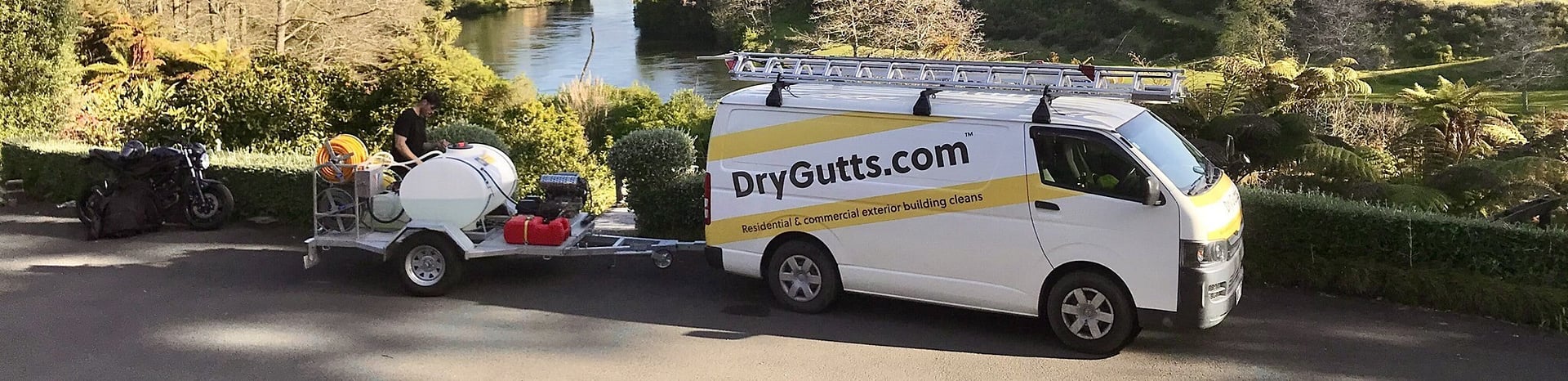
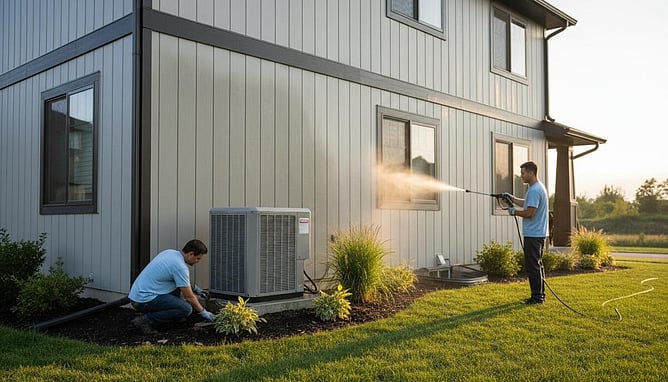
Most gutter problems look the same at first. Water spills over the edge, stains the cladding, or drips near the entry. In many Hamilton homes, proper cleaning solves the problem. DryGutts focuses on gutter cleaning, roof cleaning, and exterior house washing across Hamilton and the wider Waikato.
But some problems keep coming back. The gutter gets cleaned, then the overflow returns after the next solid rain. That is usually the point where homeowners need to stop asking, “Is it blocked?” and start asking, “Is the system still doing its job?”
Start with the simple explanation
The first cause is still the most common. Leaves, roof grit, moss, and sludge collect in the gutter, slowing the flow. When enough debris builds up, the water has nowhere to go.
Downpipes can also be part of the problem. The gutter may be clear across the top, but blocked lower down. In that case, rain backs up and spills over the front edge.This is why cleaning matters. A clean gutter lets you see the real condition of the system. It removes the easy problem first and exposes the harder one.
Watch for repeat overflows in the same spot
If the same section overflows every winter, pay attention. Repeated trouble in one location often points to a structural issue. The fall may be wrong, the join may be failing, or the bracket support may have shifted.
These are not cleaning problems. They are performance problems. Once the shape or support is compromised, water will keep finding the same weak point.
Look for visible signs of wear
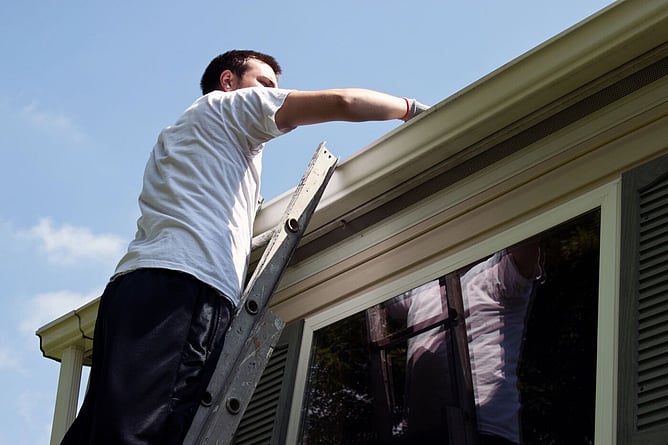
Some clues are easy to spot from the ground. Look for rust, bowing, sagging runs, drips at joins, and staining under the fascia. Peeling paint along the roof edge can also indicate ongoing overflow.
The fascia matters too. Fine Line Fascia & Spouting in Hamilton also notes that fascia supports the guttering and helps guide rainwater correctly. If the fascia is unstable or deteriorating, the gutter may not sit or drain as it should.
Older layouts can create ongoing trouble
Some homes have older internal gutter systems. These can be harder to monitor and more disruptive when they fail. Water can track into places homeowners do not see straight away.
That does not mean every internal gutter is defective. It does mean some properties move beyond maintenance faster than others. Where failure is recurring, a conversion or replacement may make more sense than repeated cleans.
Hamilton conditions can make weaknesses show sooner
Hamilton homes deal with regular runoff from roofs, driveways, and other hard surfaces. Waikato Regional Council notes that stormwater moves from roofs into gutters, drains, and the wider network. When that path is not working, small faults show up quickly.
This matters across both older streets and newer growth areas. Hamilton City Council identifies Peacocke, Rotokauri, Rototuna, and Ruakura as major growth areas. Different house ages and layouts still share the same basic need for reliable water control.
Know when you are paying twice
Repeated cleaning has value when buildup is the issue. It has less value when the gutter itself is failing. If you are clearing the same section often, but still getting overflow, the money may be going to the symptom.
That is usually the moment to compare options. One path is another maintenance visit. The other is to assess whether the profile, support, downpipes, or full spouting run now need replacement.
Cleaning, repair, and replacement are not the same job
This is where homeowners often get stuck. A cleaning company clears debris and helps expose the issue. A roofer may be needed for roof-edge defects. A spouting specialist may be needed when the gutter system itself is worn out.
That broader category can include fascia work, downpipe replacement, re-spouting, or internal-to-external conversions. One local example is Fine Line for gutter replacement in Hamilton where cleaning no longer restores proper performance.
A Practical Checklist Before You Decide
Use this quick checklist to work out whether the issue is routine maintenance or something more serious.
Check the gutter during rain, not just after it.
Note where water enters the gutter.
Look for points where water slows down.
Check for spots where water spills over the edge.
Pay attention to any one section that keeps causing trouble.
Inspect the ground and walls below the problem area.
Look for splash marks near the base of the house.
Check for soft or soggy ground.
Watch for damp walls or staining near the foundation.
Use these signs to judge whether the problem is isolated or affecting more of the property.
Ask whether the section improves after cleaning.
If it improves, keep up regular gutter maintenance.
If it does not improve, consider repair or replacement instead of another short-term clean.
Final thought
Good gutter maintenance still matters. For many Hamilton homes, cleaning is the right answer and should happen before winter problems set in. But when overflows keep returning, it is worth treating that as a warning, not a nuisance.
If you're unsure whether your gutter system needs cleaning, repair, or replacement, reach out for a professional assessment. Taking the next step now safeguards your Hamilton home for the future.