
Wet weather problems rarely start with one big failure. They usually begin with small maintenance issues that are easy to miss. DryGutts offers gutter cleaning, roof moss treatment, roof cleaning, and house washing in Hamilton, so this kind of early prevention falls right in their lane.
The best time to prepare is before steady rain sets in. Once surfaces stay wet for days, small faults become harder to ignore. Overflow marks, slippery paths, green growth, and damp corners all start to build on each other.
Start at the roofline
A good wet-weather check starts at the top of the house. Moss, algae, and roof debris can move quickly into gutters and downpipes. DryGutts notes that Hamilton’s humidity creates strong conditions for moss growth, which can lead to damage if left alone.
This matters because roof moss growth does not stay on the roof. Rain carries loose material down into the guttering system. That buildup can slow water flow and push runoff into places it should not go.
Check the gutters before they overflow
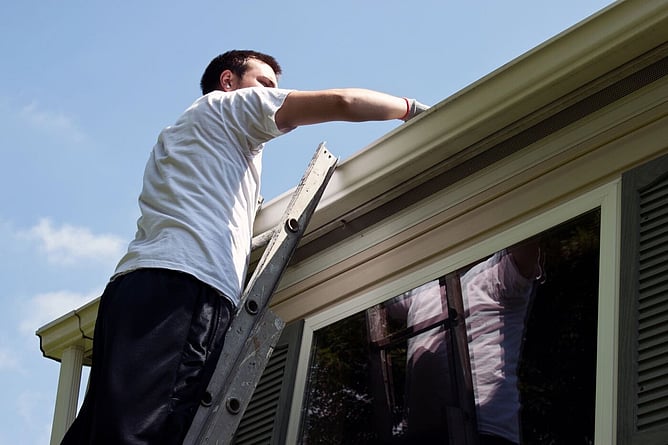
Gutters are often the first obvious trouble spot in wet weather. If they are full of sludge, leaves, or roof grit, they cannot move water properly. DryGutts lists gutter cleaning as a core service for exactly this reason.
Do not just look for visible debris. Watch for sagging sections, drips at joins, and one side that seems to overflow first. These clues can tell you whether the problem is a basic blockage or something more structural.
Follow the water path to the ground
After the gutters, check where the water goes next. Downpipes should discharge cleanly, and the ground below should not stay soft or stained. If water is backing up, splashing against the wall, or pooling near the base of the house, the issue may be bigger than surface cleaning.
This is especially worth checking before long wet spells. Water that sits near entries, decks, or paths can quickly become a slip risk. It can also make the property feel damp and poorly maintained, even when the actual fix is still manageable.
Clean the surfaces people use every day
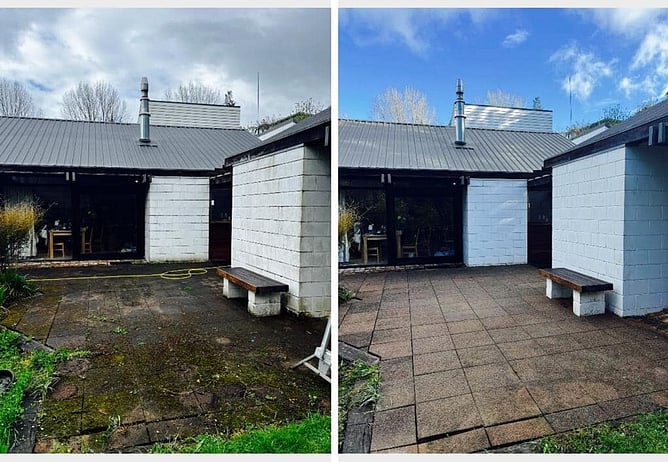
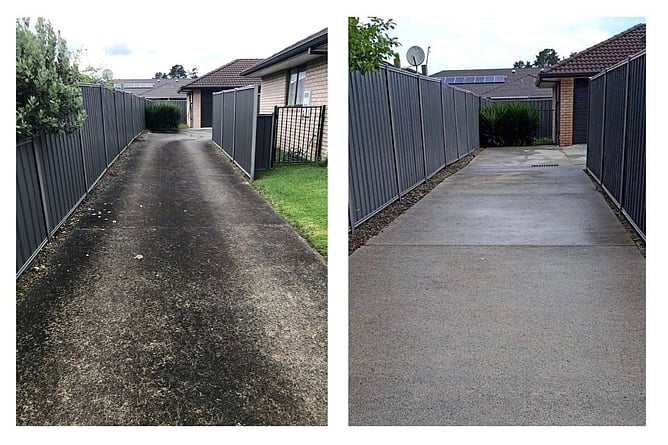
Paths, steps, and driveway edges often hold grime longer than owners realise. When wet weather arrives, those areas can become slippery fast. DryGutts’ wider exterior cleaning work is built around removing that buildup from the surfaces people use most often.
This is one of the simplest jobs with the biggest payoff. A clean path looks better, but it also feels safer. That matters around side entries, bins, washing lines, and any route used in the rain.
Pay attention to newer and growing neighbourhoods too
Wet-weather preparation is not only for older homes. Hamilton City Council identifies Peacocke, Rotokauri, Rototuna, and Ruakura as major growth areas, and newer properties still need clear roof runoff and clean surfaces. Newer sections can also have more hard paving, which changes how quickly water moves across the site.
That means the same routine still applies. Check the roof, clear the gutters, inspect the downpipes, and look at where water settles after rain. A modern home can still develop the same wet-weather trouble spots if the basics are ignored.
Know when cleaning is no longer the answer
Cleaning is the right first step, but not always the final one. If the same section keeps failing, the guttering may be cracked, brittle, or simply past its best. Flood Roofing’s Kerikeri spouting page makes the same point from the replacement side, noting that old spouting can lead to leaks and water damage when the system itself is failing.
That is where homeowners need to separate maintenance from replacement. In Hamilton, one job may stop at a clean or minor repair. In other regions such as Kerikeri, similar problems may move into full spouting replacement when the gutter system is outdated or inefficient.
Use a simple wet-weather routine
A practical routine does not need to be complicated. Check gutters before the wetter months. Treat roof moss before it spreads. Inspect paths and steps after heavy rain, and take note of any section that stays wet longer than it should.
Small patterns matter. One overflow point, one damp wall, or one slippery path often tells you where the next bigger issue will appear. Catching those signs early is usually cheaper, safer, and less stressful than dealing with the damage later.
Final thought
Preparing for winter and wet weather is really about restoring the full water path around the home. Water should move cleanly off the roof, through the gutters, down the pipes, and away from the house. When each part is checked in time, the whole property handles winter better.
That makes this kind of maintenance worth doing before the weather turns. For Hamilton homeowners, the most useful starting point is often the simplest one: clean what you can see, test what carries the water, and fix what no longer performs properly.
Need help with your exterior cleaning? Give us a call at Dry Gutts.
General enquiries : 022 462 9405
After hours phone : 027 448 7761
Email: admin@drygutts.com