
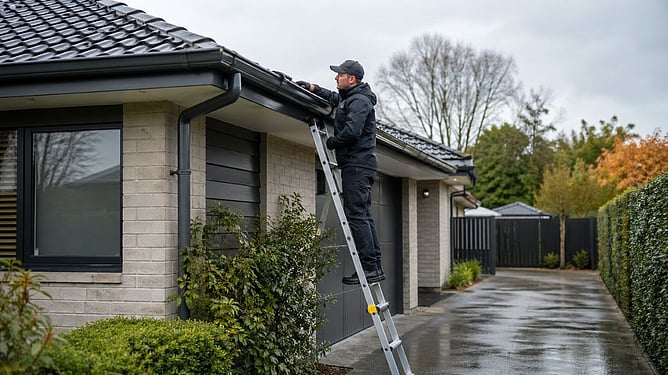
When homeowners think about winter prep, they often think about heating first. We tell them to check the roofline before winter sets in. Hamilton’s wetter months can expose small drainage faults very quickly.
We work on gutter cleaning, roof cleaning, roof moss treatment, house washing, and surface cleaning across Hamilton. That work gives us a clear view of common winter warning signs. Overflow, staining, slippery paths, and damp corners often start higher up than people expect.
We start at the roof
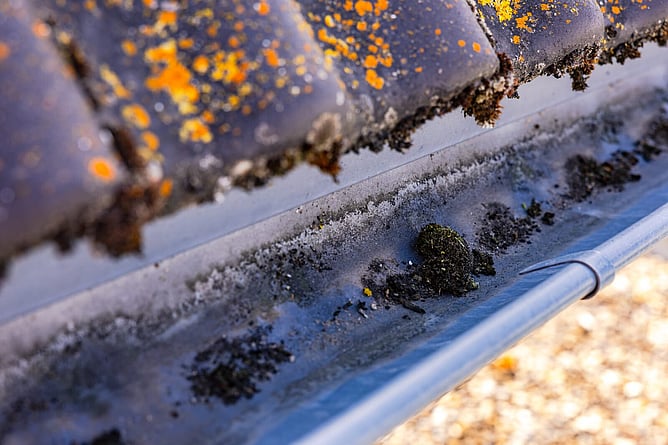
We start with the roof itself. Moss, lichen, and loose debris do not stay put once rain arrives. DryGutts notes that Hamilton’s humidity supports moss growth, especially on shaded roofs.
That matters because a gutter clean alone may not solve the real problem. If the roof keeps shedding debris, the gutter can be blocked again sooner. We tell homeowners to treat the cause as well as the symptom.
Shade makes roofline problems worse on many Hamilton homes. South-facing areas and sheltered corners dry more slowly after rain. That gives moss and fine debris more time to build up.
Gutters need to do more than look clean
Next, we look at the gutters for more than leaves. Sagging sections and dripping joins can signal trapped sludge or poor fall. A gutter can look clear from below and still fail in steady rain.
We also check the soffits, cladding, and corners below. Water marks and mildew often point to repeated overflows, not a single heavy downpour. Those signs are easy to miss in summer and harder to ignore in winter.
Leaves are not the only issue. Gutter sludge can hold moisture and slow flow even when leaf fall looks light. We also look for brackets pulling away and joins opening up. Sometimes it can mean more than a clean and mean a repair or replacement.
We follow the water to the ground
After that, we follow the water down. Downpipes, gullies, and the ground near entries show us how the system drains. If one corner stays wet after rain, the blockage may be lower down.
This is where safety starts to matter. Wet runoff near paths, decks, or steps can leave surfaces slippery for days. We often see this on shaded sites and homes with heavy tree cover.
Entry areas deserve extra attention before winter. They affect safety, daily use, and first impressions all at once. A persistent wet patch near a doorway often indicates a larger drainage issue.
Newer homes still need the same checks
We often hear that this is only an older-home issue. It is not. Hamilton continues to grow across areas such as Peacocke, Rototuna, Rotokauri, and Ruakura.
Newer homes still need clear runoff paths and working drainage. More paving can also move water faster across a section. When the flow is blocked, the signs show up around entries and walls.
Established leafy streets bring their own challenges. Trees drop material into valleys, gutters, and downpipes during the colder months. That is why annual roofline checks make sense for many local properties.
Winter prep often crosses into other jobs
A roofline check also helps plan the rest of winter maintenance. Sometimes the next step is moss treatment, exterior washing, or minor gutter repairs. In other cases, the wider review reaches beyond our work.
For example, some homeowners also line up a roofer, a drainlayer, or a fireplace service before winter. Warm Flames says its fireplace servicing suits routine maintenance and pre-winter checks. That kind of planning is practical, not dramatic.
Why timing matters
We prefer these checks before the first long wet spell. Many winter callouts could have been caught sooner with an earlier look. Early timing gives homeowners more room to clean, repair, or book trades.
There is a presentation benefit too. Clean gutters and washed cladding make inspections easier. Once the grime is gone, it is easier to spot real repairs.
A clean exterior also changes what homeowners can see. House washing and roof cleaning remove the grime that hides early wear. Once surfaces are clear, stains, cracks, and overflow marks stand out faster.
Our simple pre-winter checklist
Our advice is to keep the checklist simple. Look for roof moss, debris, and shaded buildup first. Then check gutters for clear flow and sound brackets.
After rain, walk the section and watch what happens at ground level. Check side paths, doorways, decks, and any corner that never dries. Those wet spots often tell the story faster than the gutter itself.
This applies in older leafy streets and newer parts of Hamilton. Early action usually means smaller jobs and lower costs. A clean roofline also makes the rest of winter maintenance easier.
Before winter, we tell Hamilton homeowners to look up first. The roofline often explains the slippery path or damp corner below. Once that part is working well, the rest is easier to protect.
Need some help with your roofline? Talk to us now at Dry Gutts.