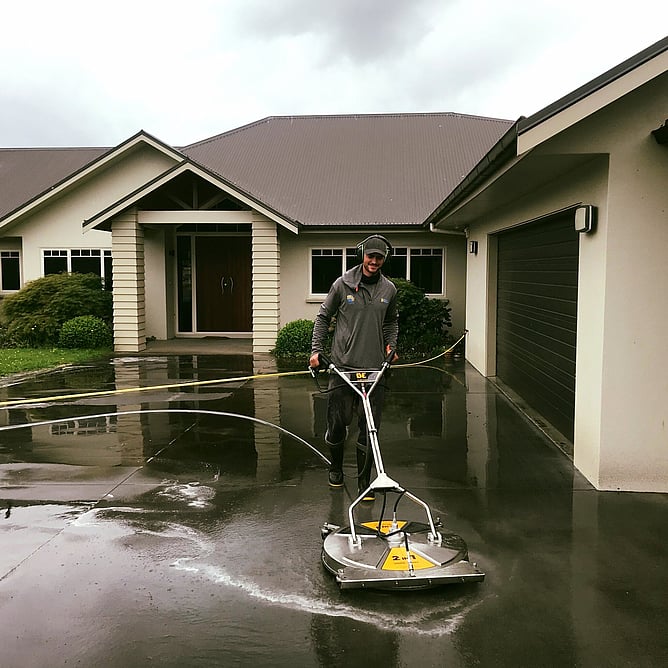
In Hamilton, a driveway can become a safety issue before it looks like one. A little moss, algae, or grime may seem harmless at first. Once rain hits, that thin layer can turn paths and concrete into a slip hazard.
We see this often in our driveway and surface cleaning work. Driveways, paths, patios, and entry areas collect moss, algae, lichen, mould, dirt, and oil over time. At DryGutts we know these contaminants thrive in Hamilton’s damp climate, especially in shaded or poorly drained areas.
That is why we tell homeowners to check the whole entry area, not just the front step. A safer entrance usually starts with visibility, drainage, and surface grip. When those three things are off, the risk builds quickly in wet weather.
We start with the surface itself
The first thing we look at is the surface condition. Green patches, dark streaks, and patchy discolouration usually point to organic growth. Tyre marks and oil stains can also make the area look more worn than it is.
This matters because driveways and paths are some of the most used surfaces around a home. They are also some of the most overlooked. DryGutts notes that slippery moss on a front path and oil stains on concrete are both common problems around Hamilton properties.
A proper cleaning does more than improve appearance. It removes embedded grime and helps slow the rapid regrowth of algae, moss, and lichen. That gives homeowners a clearer view of the surface's true condition.
Then we check how water moves
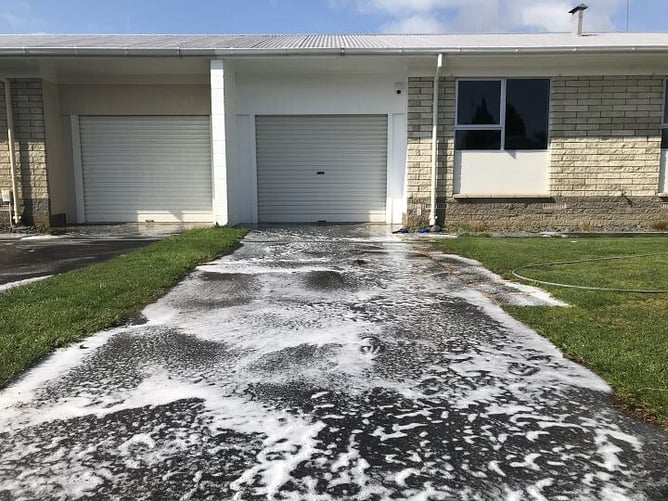
A driveway may stay slippery because the water has nowhere good to go. We look for low spots, shaded corners, runoff marks, and areas that stay damp long after rain. Poor drainage often keeps the surface wet enough for growth to return fast.
This is especially common around edges, downpipes, and narrow side entries. DryGutts’ own advice notes that slippery growth is common around damp areas and downpipes. When that moisture stays in place, the entrance becomes harder to use safely.
We also tell homeowners to check the path from the car to the door. That short route gets used every day. If it is slick, uneven, or shaded, the risk is higher than most people think.
Entry areas shape first impressions too
Safety comes first, but presentation matters as well. Buyers, visitors, and tenants form an opinion before they reach the front door. Our team at DryGutts suggest clear hard surfaces, tidy entry points, and a cleaner frontage can strongly affect that first impression.
That does not mean every property needs a major upgrade. Often, a proper surface clean is enough to make the entrance look sharper and better cared for. Once the grime is gone, it is also easier to see what actually needs fixing.
We find this especially useful before winter, before listing a property, or after a long wet spell. Clean surfaces make other decisions easier. They show whether the issue is just grime or something bigger.
We look beyond the concrete
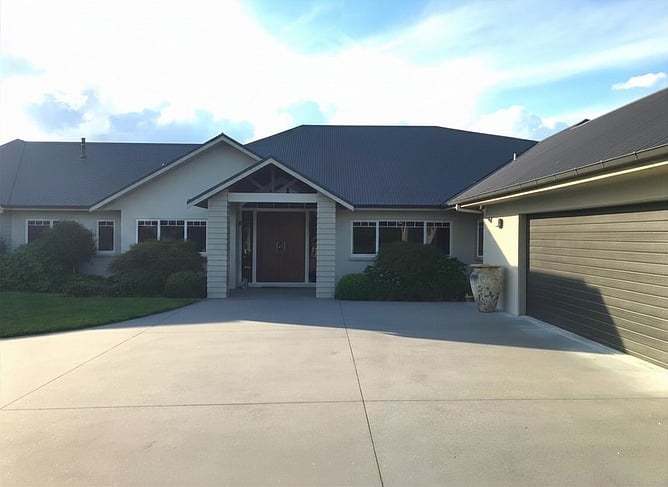
A safer entry path is not only about the driveway slab. We also look at steps, pavers, patios, side paths, and any surface leading to the front entrance. At DryGutts, we work across concrete, pavers, brick, tile, stone, and timber because every material holds dirt and moisture differently.
That wider check matters in Hamilton’s wet weather. Moss and algae on driveways, paths, and decks create slip hazards, as shown in our spring maintenance guide. A clean entry route makes daily use safer for families, visitors, and delivery drivers.
We also pay attention to shaded edges and boundary lines. These are often the last places to dry. They are also where regrowth tends to return first.
Clean surfaces help plan future entrance upgrades
One benefit of surface cleaning is clarity. Once the driveway is clean, homeowners can better judge the layout, access, and the overall look of the frontage. That matters whether the next step is repainting, landscaping, fencing, or nothing at all.
In some cases, people also use that point to compare gate options in other regions. For example, homeowners researching driveway gates in Christchurch or locally, will usually find that sliding, swing, cantilever, telescopic, and sectional sliding gates suit different layouts and space limits. That is a practical site-planning question, not just a style choice.
We are not saying every Hamilton home needs a gate. We are saying a clean entrance makes it easier to judge what the space can handle. It shows where water sits, how vehicles move, and how the approach really looks.
Our simple wet-weather checklist
We keep this checklist simple. Look for green growth, dark staining, slick patches, and areas that stay wet. Then check the route from the street or driveway to the front door.
After rain, notice where the water pools and where the surface feels slick. Pay extra attention to shaded sections, edges near downpipes, and narrow side paths. Those are often the first places to become unsafe.
For us, a safer driveway starts with a cleaner one. Once the surface is clean, the real issues stand out. That makes the next maintenance decision much easier.
Talk to us at Dry Gutts now, about your entrance cleaning plans.